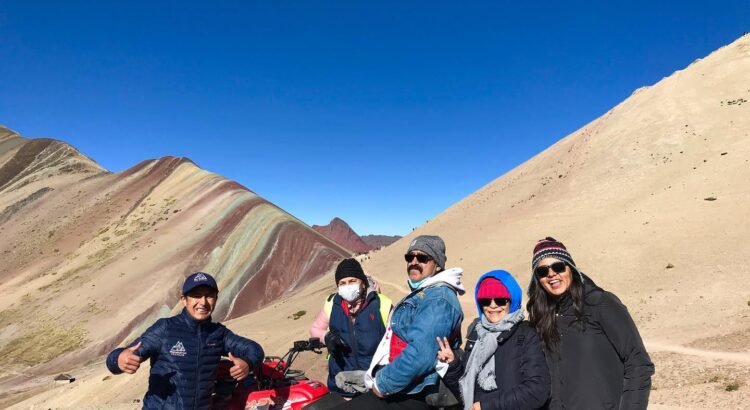
A Rainbow Mountain Tour brings you close to a strange, bright landscape. The stripes of red, yellow, green and white look unreal. These colors are not paint. They come from different minerals in the rock. This short guide explains the basics in simple terms, and gives tips that help on the trip.

How the colors formed
Layers of sediment built up long ago. Over time tectonic forces pushed these layers up when the Andes rose. Weather and erosion then exposed the bands. Each band has a different mineral mix. When those minerals meet sun and rain, the color shows.
Main minerals and their hues
- Red / Rust shades — from iron oxides like hematite and goethite. Think of rust on old metal.
- Green tones — from chlorite and other green clays. These carry iron and magnesium.
- Yellow / Mustard — caused by limonite or sulfates, sometimes jarosite in weathered layers.
- White / Light grey — quartz-rich sandstones, marls or carbonate minerals.
- Brown / Purple — mixtures of clays, marls and organic-rich layers that give darker tones.
These simple matches explain most colors. Small local changes in chemistry can shift a stripe from pink to orange. So the view may change a bit by season or light.
What affects how bright the colors look
- Wet vs dry ground. After rain, some colors darken and contrast less. Dry days often show clearer bands.
- Sun angle. Early morning and late afternoon light makes colors pop. Midday light can flatten the shades.
- Snow or dust. Snow cover hides stripes. Dust can mute them.
- Erosion and trail impact. Heavy foot traffic and erosion can change how much rock is exposed.
Quick tips for visitors
- Aim for a clear day if you want vivid colors.
- Bring layers. High altitude means strong sun and cold wind.
- Use a polariser filter (if you have one) to cut glare and boost color contrast.
- Walk slowly if you are new to altitude. High elevation can affect breathing and focus.
- Respect the site. Do not remove stones or step on sensitive parts of the slope.
A note on science and caution
Geologists study these layers to read Earth’s past climate and environments. The mineral story here is a record of seas, soils and chemical changes over millions of years. At the same time, the site faces pressure from tourism and climate change. Small care by visitors helps protect the colors for future travellers.
Plan your Rainbow Mountain Tour with True Mountain Traveler and enjoy a well-guided trip to this colorful Andean wonder. Reach out to their team and get trusted help for the high-altitude adventure.
Author Bio:
This article is written by the travel editors at True Mountain Traveler. Our team explores Peru’s top trails and creates helpful guides for anyone planning a Rainbow Mountain Tour or other great experiences near Cusco.